- PlateDiary
- Calories
- Calorie counter app, Philippines
Calories · Philippines
A calorie counter app for the Philippines, rice and all.
Most calorie apps were built for a sandwich and a salad. A Filipino meal out is a cup of rice — or two — beside a shared plate of adobo, a sizzling sisig and a pitcher of iced tea. Here is what a calorie counter has to get right for that table, rough numbers for the plates people actually order, and where PlateDiary fits.
Free on iPhone and Android. No account, and it works with no signal.
In short
A good calorie counter app in the Philippines has to handle rice separately, shared plates and local dishes. PlateDiary does this from one photo of the table: with Calories turned on, each dish and each cup of rice gets a rough “~” number you can accept or correct. Most Filipino plates with one cup of rice land around 500–700 calories, and each extra cup of plain rice adds about 210.
Checked
A checklist
What a calorie counter needs to get right here.
- It knows the dishes. Tapsilog, kare-kare and pancit palabok, not just “beef with rice”.
- Rice is its own line. The cup of rice moves the number more than almost any choice of dish, so it should never hide inside the plate.
- Shared plates work. Family-style tables are normal. You should be able to keep your share, not the whole platter.
- It copes with patchy signal. Capture and browsing should not need data — handy at a roadside eatery in the province or a mall basement food court.
- It works on Android and iPhone. And it shouldn’t need an account just to remember lunch.
The plates
Rough numbers for what people actually order.
These come from our own dish pages, built from the Philippine Food Composition Tables and typical restaurant portions. Restaurant servings vary a lot, so read each as a starting point, not a measurement. The full menu is in Filipino food calories.
| Serving | About | |
|---|---|---|
| Chicken inasal | One leg quarter with a cup of rice | ~550 |
| Chicken adobo | Two pieces with sauce and a cup of rice | ~620 |
| Tapsilog | Beef tapa, garlic rice and a fried egg | ~720 |
| Pork sisig | A sizzling plate for one, no rice | ~600 |
| Sinigang na baboy | A share of the pot, no rice | ~580 |
| Kare-kare | With bagoong and a cup of rice | ~1,050 |
| Pancit canton | One restaurant plate | ~480 |
| Halo-halo | One restaurant glass | ~330 |
The rice maths
The cup of rice is the biggest lever on the table.
The Philippine Food Composition Tables put boiled white rice at about 129 calories per 100 g and fried rice at about 187. A level restaurant cup of steamed rice comes to roughly 210 — see calories in a cup of rice — and a cup of garlic rice to roughly 300, because of the oil.
- Half a cup of plain rice: about 100.
- A heaped cup (about 200 g): about 260.
- Every extra cup of plain rice at an all-you-can-eat place: about 210 more.
- Plain rice instead of garlic rice on a silog: about 90 less.
Fast food
Jollibee, and why the numbers are a little foreign.
Jollibee publishes menu facts for its US restaurants, and our pages use them: a 1-piece Chickenjoy with rice and gravy is about 600, Jollibee Spaghetti about 610, a 2-piece Burger Steak with rice about 570, and a Peach Mango Pie about 270.
We could not find the same published numbers for Philippine stores, and servings may differ, so treat those as close cousins rather than exact. A photo estimate of the plate in front of you, corrected when you know better, is often the more honest number.
How PlateDiary does it
One photo of the table, a number per dish.
- Turn Calories onSettings → PlateDiary AI → Calories. They are off unless you turn them on; with them off, PlateDiary shows no numbers at all.
- Snap the tableOne photo when the food lands. Every dish, drink and cup of rice is cut out on your phone into its own save, offline.
- Let PlateDiary AI read itTap Read and each save gets a name and one rough “~” number. Small pictures of the cut-out dishes go up, with the place’s name as a hint — never the table photo, faces or your location.
- Keep your shareShared a kare-kare four ways? Tap Edit and type your part. Your fix is remembered for that dish at that place.
- See it add upThe Calories page adds up the meals you saved, by day, dish and place.
Be honest
What to know before you rely on it.
- Estimates are rough and usually run low. A photo can’t see the oil in the sinangag or the fat in the sisig. The app says so too.
- 10 free AI tries per phone, then the PlateDiary AI membership. Prices come from your store, in pesos where you are.
- No AI needed to type a number on any food or drink save — free.
- It’s not a full tracker. No barcode scanner, exercise or weight, and nothing is written to Apple Health or Health Connect.
- For a medical reason, talk to a doctor or a registered dietitian rather than leaning on any app.
In PlateDiary
A rough number for the dishes you save — only if you want one.
Off unless you turn them on
Calories in PlateDiary are off unless you turn them on. Switch them on and, when PlateDiary AI reads your photo of the table, each dish gets one rough “~” number. Accept it or change it; a number you correct is remembered for that dish. With Calories off, the app looks exactly as it did before.
A read sends small pictures of the cut-out dishes, with the place's name as a hint — never the table photo, faces or your location. Calorie numbers never go to analytics, and nothing is written to a health app. PlateDiary AI starts with free tries; here is how it works.
Questions
Questions people ask.
What is a good calorie counter app in the Philippines?
One that knows Filipino dishes, counts rice separately and copes with shared plates. PlateDiary does that from one photo of the table, with Calories off unless you turn them on; full trackers like MyFitnessPal suit packaged food and home cooking.
How many calories are in a cup of rice?
A level restaurant cup of steamed white rice is roughly 210 calories, half a cup about 100, and a cup of garlic rice about 300.
How many calories are in a Chickenjoy with rice?
Jollibee’s published US menu facts put a 1-piece Chickenjoy thigh with rice and gravy at about 600. Philippine servings may differ.
Does PlateDiary work offline?
Capture, cut-outs, typing your own numbers and browsing work with no signal. AI reads need a connection, and the read card tells you when you are offline.
Is PlateDiary available on Android in the Philippines?
Yes. PlateDiary is on Google Play and the App Store, free to download, with prices shown by your store in your currency.
Keep reading
More from the diary
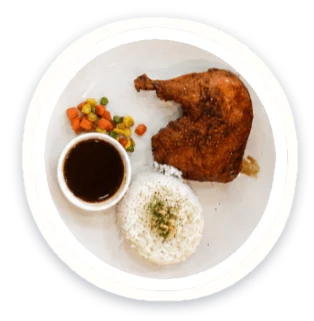
Calories
Filipino food
Rough calories for Filipino restaurant plates — adobo, inasal, lechon kawali, pancit, silog and halo-halo — with and without rice, and what makes them heavier.
Open →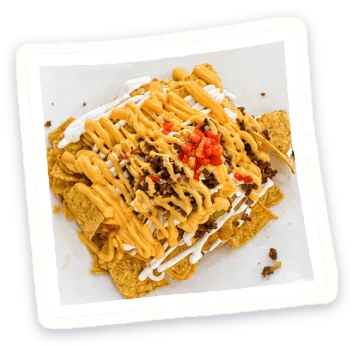
Calories
Calorie counter for eating out
Snap the table and each dish gets one rough calorie number you can accept or correct. A photo calorie tracker for restaurant meals, with no account to make.
Open →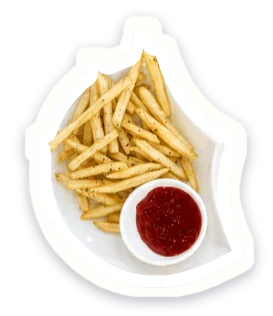
Calories
Calories when eating out
How to count calories when eating out, no scale needed: start from a similar dish, break the plate into parts, watch oil and rice, and count only your share.
Open →Guides
Filipino food to try
Filipino food to try on a first trip: adobo, sinigang, lechon, sisig, halo-halo and the regional dishes worth a flight, plus how a Filipino meal works.
Open →Made for
Filipinos abroad
For Filipinos abroad: how to find Filipino food in a new city, and how to keep the sinigang, the halo-halo and the bakery that taste like home on one map.
Open →