- PlateDiary
- Guides
- How to keep a food journal
Guide · Food journal
How to keep a food journal, for meals you’ll want to remember.
Most food journals die in week two, not because people stop eating out, but because writing at the table feels like homework. Here is a way to keep one that is quick on the night and a joy to flip through a year later.
Free on iPhone and Android. No account, and it works with no signal.
In short
To keep a food journal of meals out, write down four things after each meal — the dish, the place, who you were with, and one line about what made it good — and keep it so quick (a photo and a few words) that you never skip a night.
Checked
First
Decide what your food journal is for.
“Food journal” means three different things, and mixing them up is why so many people quit. Pick one before you write a word:
- A memory journal — the meals out you want to remember: the place, the dish, the people, the night. This guide is about this one.
- A health food diary — every bite, with times and how you felt afterwards, usually for a doctor or a specialist. If someone has asked you to keep one, use the sheet they give you; it is built for what they need to see.
- A cooking notebook — what you made at home and how to make it again. Useful, but a different book.
What to write
The four things that matter, and the extras that don’t.
A good entry answers the questions future-you will actually ask: what was that dish, where was it, who was I with, and was it worth going back? Everything else is a bonus.
- The dish. Its name as the menu wrote it, or your own name for it (“the green curry that made Theo cry”). A photo counts.
- The place. Name and neighbourhood. Six months from now “that ramen place near the station” will not be enough.
- Who you were with. First names are fine. This is the part people treasure most later and almost never write down.
- One line. Why it mattered: the crackling, the view, the argument about dessert, the waiter who remembered you.
- Optional extras: stars, what it came to, what you would order next time, the weather, the song that was playing.
Example entries
What a good entry looks like.
Short beats thorough. Each of these took under a minute, and each one brings the whole night back:
- Fri 7 March · Dishoom, King’s Cross · with Priya and Sam. Black daal and bacon naan roll. Queued 40 minutes in the rain and didn’t mind. Order the daal again; skip the lassi.
- Sun 23 March · the dumpling place on Elizabeth St · solo. Pork and chive, pan-fried. Read a whole chapter at the counter. 4 stars — the chilli oil is the reason to come.
- Sat 5 April · Lena’s birthday, rooftop taquería. Al pastor tacos, two rounds. Lena made us all try the mezcal. Too loud to talk, perfect anyway.
- Wed 16 April · work lunch, Vietnamese canteen. Bún chả. Kenji showed me how to dunk properly. The usual from now on.
Paper or phone
Paper, a notes app, a spreadsheet, or a food journal app?
There is no wrong format — only the one you will still be using in a year. Here is how they compare for meals out:
| Paper notebook | Notes app | Spreadsheet | Food journal app | |
|---|---|---|---|---|
| Quick at the table | Slow, and odd to do | Fairly quick | Slow on a phone | A photo is enough |
| Photos of the food | Printed and glued | Yes, mixed in | Awkward | Yes, built in |
| Find a place again | Flip pages | Search the text | Sort and filter | Search by place or dish |
| Feels like a keepsake | Very | Not really | Not at all | Depends on the app |
| Best for | Slow, crafty people | Minimalists | People who love lists | Busy people |
Keep it up
Make it take three seconds on the night.
The trick is to split the work: capture at the table, write later — or never. A system that survives a busy week looks like this:
- Take one photo of the whole tableBefore anyone digs in. One wide shot keeps every dish, the plates and the hands reaching in.
- Stop there if the night is busyThe photo already carries the date and usually the place. That alone is a usable entry.
- Add the four things on the way homeOn the bus, in the taxi, in bed: dish, place, people, one line. Two minutes, tops.
- Fill gaps on SundayOnce a week, scroll back and name anything you skipped while you still remember it.
Look back
Read it back once a month.
A journal pays you back when you reread it. At the end of each month, flip through and answer three questions: What was the dish of the month? Where did I go back to? Who did I eat with most? At the end of the year, pick a top five and the meal you would relive first.
Those answers turn into great things to share: a birthday message to the friend you ate with most, a list of places to take visitors, a reason to go back somewhere you forgot you loved.
The shortcut
The three-second version: PlateDiary.
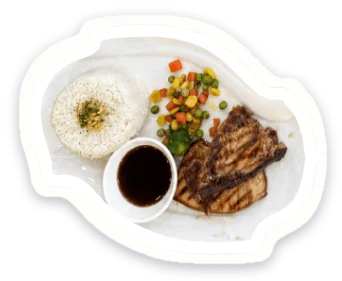
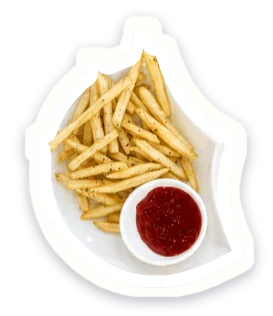
We make PlateDiary, a food journal built exactly around the method above. You snap one photo of the table and every dish is cut out into its own save on your phone, in about a second. Saves group themselves into a moment by place and time, so the place and date are filled in for you.
Names, stars, notes and companions are all optional, and your past dish names come back as one-tap chips — so it can count “eaten 3×” for you. Once a month is over, it becomes a story you can flip through. It works offline and needs no account.
Questions
Questions people ask.
What should I write in a food journal?
For meals out, write the dish, the place, who you were with and one line about what made it memorable. Stars, what it came to and what to order next time are nice extras.
How do I start a food journal?
Start tonight with one photo of the table and the four basics. Don’t buy a fancy notebook or plan a system first; the format matters far less than doing it the next time you eat out.
Should I take a photo of every meal?
Only the ones you would like to remember. For a memory journal, meals out, new places and nights with people you love are worth a photo; a desk lunch usually isn’t.
Is a food journal the same as a food diary?
People use the words interchangeably. “Food diary” more often means a daily record for health reasons, while a food journal can be about memories, places and people.
How long should a food journal entry be?
One to three sentences is plenty. Short entries get written; long ones get postponed and then forgotten.
Keep reading
More from the diary

PlateDiary
Restaurant journal
A restaurant journal from one photo of the table: every dish, the place, who you were with and what to order again. Private, works offline, free.
Open →Guides
Food journal ideas and prompts
Sixty prompts about the dish, the place, the people, the night and looking back, plus page ideas for a paper journal. Free, and made for eating out.
Open →
Guides
Restaurant journal template
A free restaurant journal template for Google Sheets, Notion and paper: place, dish, stars, who you went with and a note, plus formulas that count visits.
Open →
Features
Food photo diary
Snap the table and PlateDiary keeps the rest: each dish cut out and grouped into the moment with its place and time, on a board you can search by dish or place.
Open →Compare
Journaling apps vs a food diary
Day One and Apple Journal are made for writing. A food diary is made for meals: every dish cut out, with places, people and counts. When to use which one.
Open →