- PlateDiary
- Calories
- Calories when eating out
Calories · Guide
How to count calories when you eat out, without weighing a thing.
Restaurant food is the hardest food to count. There is no label, the portion is whatever the kitchen felt like, and the richest part is often invisible. Here is a method that gets you a fair number in under a minute — and an honest idea of how rough it is.
Free on iPhone and Android. No account, and it works with no signal.
In short
To count calories when eating out, start from a typical number for a similar restaurant dish, adjust for the three things that move it most — oil and sauce, the rice, noodle or bread base, and drinks — and count only your share of anything shared. Restaurant portions vary, so treat the result as a rough estimate.
Checked
Seven steps
A one-minute method for any meal out.
- Look for posted numbers firstIn the US, chains with 20 or more locations must post calories on the menu and have the rest of the facts on request. If the number is printed, start there.
- Find a similar dishNo posted number? Start from a typical restaurant serving of something close — a plate of pad thai, a burrito, a bowl of ramen. The dish-by-dish guide has rough numbers and ranges.
- Break the plate into partsBase (rice, noodles, bread, fries), protein, sauce and oil, and sides. A plate that looks complicated is usually four simple numbers.
- Adjust for oil and sauceGlossy, creamy, fried or swimming in sauce? Nudge your number up. A tablespoon of oil or butter is roughly 100–120 calories, and kitchens use more than home cooks.
- Count only your shareFor shared plates, divide by the people eating, or count pieces: six lumpia, four dumplings, three tacos.
- Add the drinksA 16 oz café latte is about 210, a 500 ml bubble tea with pearls about 280. Sweet cocktails and refills add up quietly.
- Round it and move onOne rough number per dish, rounded to the nearest 10 or 50, is as precise as restaurant food allows. Then enjoy dinner.
Why it’s hard
Restaurant meals run bigger than you think.
When Tufts researchers measured 157 full meals from 33 independent and small-chain restaurants in Boston, the average came to 1,327 calories a meal — about two-thirds of the 2,000-calorie reference on food labels, in one sitting.
Even printed numbers are approximate. In an earlier Tufts study of 269 chain-restaurant foods, stated calories were right on average, but 19% of items were off by more than 100 calories, and lower-calorie dishes tended to contain more than their label said.
None of this means you can’t count a meal out. It means a good estimate admits it is rough, and errs a little high rather than low.
Eyeball guide
The parts that move the number most.
| Part of the meal | Roughly | What to watch |
|---|---|---|
| A cup of cooked white rice | ~210 | Garlic fried rice is ~300 a cup |
| A tablespoon of oil or butter | ~100–120 | Glossy sauces, fried food, buttered bread |
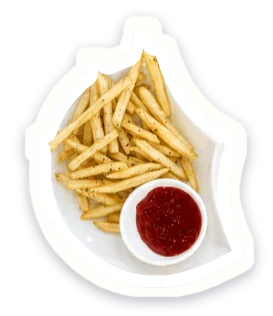
| A restaurant side of fries | ~490 | Swapping it out changes the plate most |
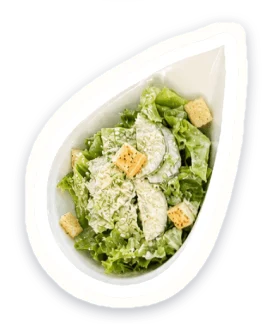
| Caesar salad, starter size | ~400 | Dressing: can reach ~800 |
| Shared nachos, whole order | ~1,050 | Divide by the table |
| Bubble tea with pearls, 500 ml | ~280 | Sugar level and toppings |
Cheat sheet
What drives the number, cuisine by cuisine.
| Cuisine | Usually drives it | Easy adjustment |
|---|---|---|
| Japanese | Rich broth, frying, rice | Leave some ramen broth |
| Korean | Pork belly plates, rice, glazes | Count BBQ plates, not cuts |
| Chinese | Fried rice, battered meats | Plain rice instead of fried |
| Thai & Vietnamese | Wok oil, coconut, sugar | Broth soups run lighter |
| Malaysian & Singaporean | Coconut rice, lard, gravy | Less gravy, leave broth |
| Indian | Cream, ghee, butter naan | Count the bread separately |
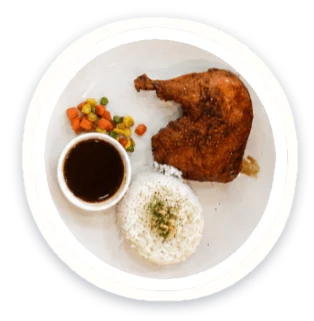
| Filipino | Rice cups, fried pork, sauces | Count each cup of rice |
| Mexican | Cheese, tortillas, chips | Bowl instead of burrito |
| Italian | Cream sauces, plate size | Tomato sauces run lighter |
| Middle Eastern | Bread, tahini, olive oil | Count the pitas |
| American & British | Fries, batter, dressing | Swap the side |
| Café & desserts | Milk, syrup, cream | Size down, share the slice |
Let a photo help
Let one photo make the first guess.
If you’d rather not do the maths at the table, PlateDiary’s calorie counter does the first pass from one photo: every dish on the table becomes a save with a rough “~” number. You accept it, or correct it to your share, and your correction is remembered for that dish at that place.
Calories in PlateDiary are off unless you turn them on, so the app can stay a simple food memory app on the nights you don’t want numbers at all.
In PlateDiary
A rough number for the dishes you save — only if you want one.
Off unless you turn them on
Calories in PlateDiary are off unless you turn them on. Switch them on and, when PlateDiary AI reads your photo of the table, each dish gets one rough “~” number. Accept it or change it; a number you correct is remembered for that dish. With Calories off, the app looks exactly as it did before.
A read sends small pictures of the cut-out dishes, with the place's name as a hint — never the table photo, faces or your location. Calorie numbers never go to analytics, and nothing is written to a health app. PlateDiary AI starts with free tries; here is how it works.
Sources
Where the facts come from
- Tufts Now — Independent and small-chain restaurant meals (JAMA Internal Medicine, 2013)
- Tufts Now — Researchers examine restaurants’ stated calorie counts (JAMA, 2011)
- U.S. FDA — Guidance on menu labeling for chains with 20 or more locations (2018)
- USDA FoodData Central — Rice, white, cooked, no added fat (FDC 2708408)
Questions
Questions people ask.
How many calories is a typical restaurant meal?
Often more than people expect: one Boston study measured independent and small-chain restaurant meals at about 1,327 calories on average, sides included. Restaurant portions vary widely, so a single dish can be far lighter or heavier.
Are restaurant calorie counts accurate?
On average, chain numbers are close, but in one study about a fifth of items were off by more than 100 calories, and lighter-sounding dishes were more likely to be understated.
How can I guess calories without a scale?
Start from a typical number for a similar restaurant dish, then adjust for the base, the oil and sauce, and your share. Rounded to the nearest 10 or 50, that is as close as restaurant food allows.
How do I count calories at a buffet or unlimited BBQ?
Count plates or pieces rather than the whole spread. Note roughly how many portions you had of each thing and multiply by a typical serving.
Do drinks and sauces really matter?
Yes. Sweet drinks, dressings and glossy sauces are where restaurant estimates go wrong most, because they are easy to forget and hard to see in a photo.
Keep reading
More from the diary

Calories
Calories
Typical calories in restaurant dishes by cuisine, from pad thai to fish and chips: the usual range, protein, carbs and fat, what moves the number, and sources.
Open →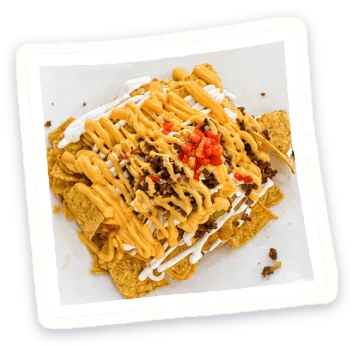
Calories
Calorie counter for eating out
Snap the table and each dish gets one rough calorie number you can accept or correct. A photo calorie tracker for restaurant meals, with no account to make.
Open →
Calories
AI calorie counter accuracy
Photo calorie apps usually guess low, often by a third of a meal. What a 2026 NIH test of four apps found, why fat trips them up, and how to correct them.
Open →Compare
Calorie trackers for eating out
Which calorie tracker works when you eat out? Chains, independent spots, shared plates and drinks, each matched to the apps that handle it well.
Open →Guides
Split a restaurant bill
Even, itemised or by share: fair ways to split a restaurant bill, a worked example, service charges and tips in a few countries, and lines for awkward moments.
Open →