- PlateDiary
- Calories
- Chinese food
- Peking duck
Calories · Chinese
Calories in Peking duck
A typical restaurant serving of Peking duck (a share of roast duck with six pancakes, sauce, cucumber and spring onion, about 210 g) is about 570 calories, usually 420–800.
Restaurant portions vary; this is a typical estimate, not a label. Also called crispy aromatic duck, roast duck pancakes, Beijing duck.
The usual range
Drawn on one 0–2,000 scale shared by every dish page, so plates compare at a glance.
Protein, carbs and fat
- Protein35 g
- Carbs40 g
- Fat31 g
One serving
- Serving
- a share of roast duck with six pancakes, sauce, cucumber and spring onion
- Weight
- ~210 g
- Per 100 g
- ~270
The dish
About Peking duck
Peking duck's richness is in the lacquered skin and the fat beneath it; the thin pancakes and sweet bean sauce add carbs. A share of about 100 g of duck with six pancakes lands near 570. Built from its parts: 100 g of Chinese-style roast duck with six thin pancakes, 20 g sauce and cucumber, valued with UK CoFID takeaway samples and Japan MEXT sauce figures.
What moves the number
Why one plate is 420 and another 800
- Crisp duck skin and its fat layer
- Number of pancakes you wrap
- Sweet bean or hoisin sauce
Ordering lighter
If you want a lighter plate
- Take more meat and less skin
- Fill wraps with extra cucumber and spring onion
- Share a whole duck across the table
Side by side
Next to other Chinese dishes
In PlateDiary
A rough number for the dishes you save — only if you want one.
Off unless you turn them on
Calories in PlateDiary are off unless you turn them on. Switch them on and, when PlateDiary AI reads your photo of the table, each dish gets one rough “~” number. Accept it or change it; a number you correct is remembered for that dish. With Calories off, the app looks exactly as it did before.
A read sends small pictures of the cut-out dishes, with the place's name as a hint — never the table photo, faces or your location. Calorie numbers never go to analytics, and nothing is written to a health app. PlateDiary AI starts with free tries; here is how it works.
How these numbers were made
Method and sources
Last reviewed
Restaurant portions and cooking vary, so these are typical estimates for one serving, built from the sources below. Treat it as a rough number: your plate may land anywhere in the range.
If you manage a health condition, ask a doctor or registered dietitian.
AI helped draft this page; every number was checked against the sources.
- UK CoFID 2021 (McCance and Widdowson's Composition of Foods) — Duck, crispy, Chinese style, meat and skin, code 18-490
- UK CoFID 2021 (McCance and Widdowson's Composition of Foods) — Pancakes (served with crispy duck), takeaway, code 11-922
- Japan MEXT Standard Tables of Food Composition (8th ed., 2023) — Tianmianjiang (sweet bean sauce), 17106
- UK CoFID 2021 (McCance and Widdowson's Composition of Foods) — Cucumber, raw, code 13-523
Questions
Questions people ask.
How many calories are in Peking duck?
A typical restaurant serving of Peking duck (a share of roast duck with six pancakes, sauce, cucumber and spring onion, about 210 g) is about 570 calories, usually 420–800. The number depends mostly on the portion and how it is cooked.
Where do the calories in Peking duck come from?
The lacquered skin and the fat beneath it; the pancakes and sweet bean sauce add the carbs.
Is Peking duck a heavy dish?
A share of about 100 g of duck with six pancakes is about 570. Sharing a whole duck across the table keeps each share there.
What changes the calories in Peking duck?
Crisp duck skin and its fat layer. Number of pancakes you wrap.
How can I order Peking duck lighter?
Take more meat and less skin. Fill wraps with extra cucumber and spring onion.
Can PlateDiary show calories for the dishes I eat out?
Yes, if you want it to: calories in PlateDiary are off unless you turn them on. Switch them on and each dish you save from a photo of the table gets one rough “~” number you can accept or change.
Keep reading
More plates

Chinese
Calories in char siu rice
About 610 for one hawker plate of barbecued pork with rice and cucumber.
Open →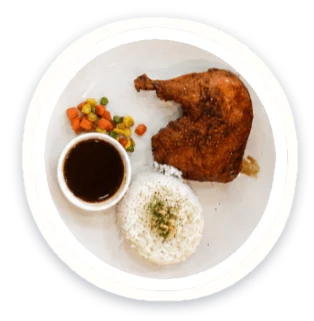
Filipino
Calories in lechon kawali
About 580 for one restaurant serving, rice not included.
Open →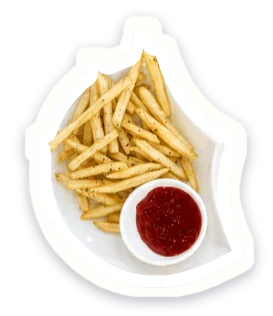
Chinese
Calories in xiao long bao
About 360 for one basket of 6 pork soup dumplings.
Open →
Chinese
Calories in fried spring rolls
About 290 for two takeaway meat spring rolls, dipping sauce not included.
Open →